
Replace Your Listserv

The TL;DR

  • For organizations that have run listservs, the Commons can serve as a fully-featured listserv replacement. 
  • In addition to allowing users to continue to post and interact via email, the Commons offers the ability to collaboratively work on documents, share files, and collect the deposits members make to the repository.
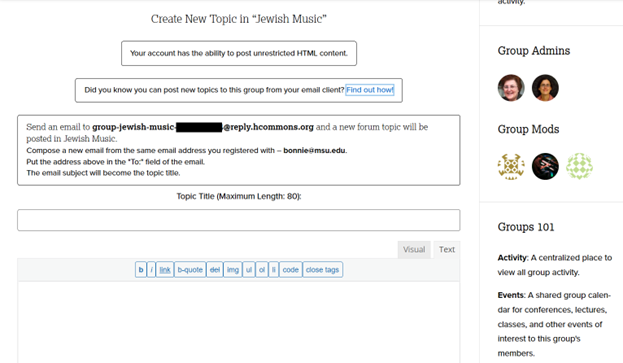
Create a New Topic in "Jewish Music" group on the Commons. Send an email to group-jewish-music@reply.hcommons-staging.org and a new forum topic will be posted in Jewish music.
Commons group “Jewish Music” posting content that will be emailed to their group, similar to a listserv.

Stay connected with your colleagues.

An organization has run a listserv since 1999, serving around 350 people. The listserv has become clunky and the user who has run it at their institution is retiring, leaving it without a host. They want to move to a host that allows for more collaborative work on shared documents and supports the sharing of files. They also want to begin to gather and keep track of work done by listserv members shared in repositories. 

To start the process of moving a listserv to the Commons, the administrator should create a group with a discussion forum. More information on creating and managing groups can be found on our help and support site. Groups can be public, private, or hidden. For a listserv that is private, users have the choice between a private or hidden group. Private groups allow others to apply to join, whereas hidden groups are invitation-only. If you want to encourage growth a public group will allow anyone with interest to join automatically. 
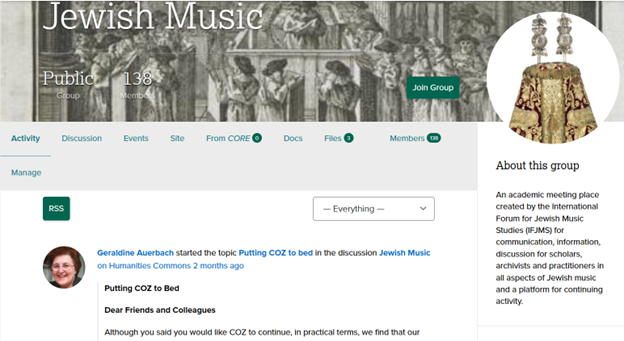
Activity Section of the "Jewish Music" Humanities Commons Group. User Geraldine Auerbach started the topic "Putting COZ to bed."
The administrator of “Jewish Music” begins the conversation about ending their previous listserv.

Migration

  • Let subscribers know that you’ll be moving to the Commons, encouraging them to join the site and join the group. 
  • Consider creating a one-page document with information about the Commons, and the reasons for moving to a web-based discussion from email.
  • Some users may wish to continue to interact by email, and there are instructions for creating a discussion topic and replying by email on our help and support site. 
  • Set a cutover date and announce it widely. Shut down the email listserv on that date. 
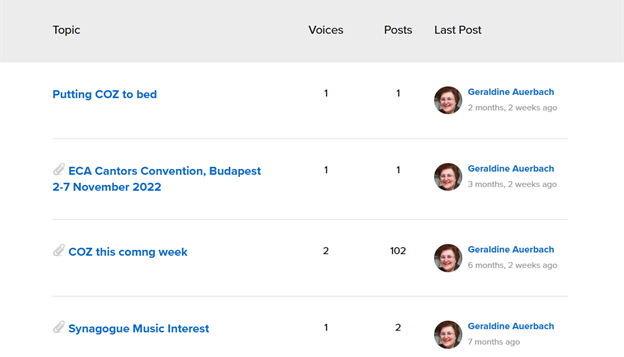
Geraldine Auerbach posting "COZ this coming week" and "Putting COZ to bed" on the group discussion for "Jewish Music" on the Commons
The administrator of “Jewish Music” reminds group members of the end of their previous email listserv.

FAQs

QuestionAnswer
What could I expect as some resistance from my long-time email listserv members?It may be difficult for your long-time listserv members to adapt at first due to the perceived extra steps of logging into a website and taking multiple clicks to access your content. It’s important to remind them that this new format allows everything to be much more organized and collaborative than a listserv of the past.
Do my listserv members need to create a Commons account in order to receive and reply to posts?Yes! Members will need to create an account and be part of the group. If they’re still not receiving emails, make sure they’ve double checked their setting for group notifications.

Examples

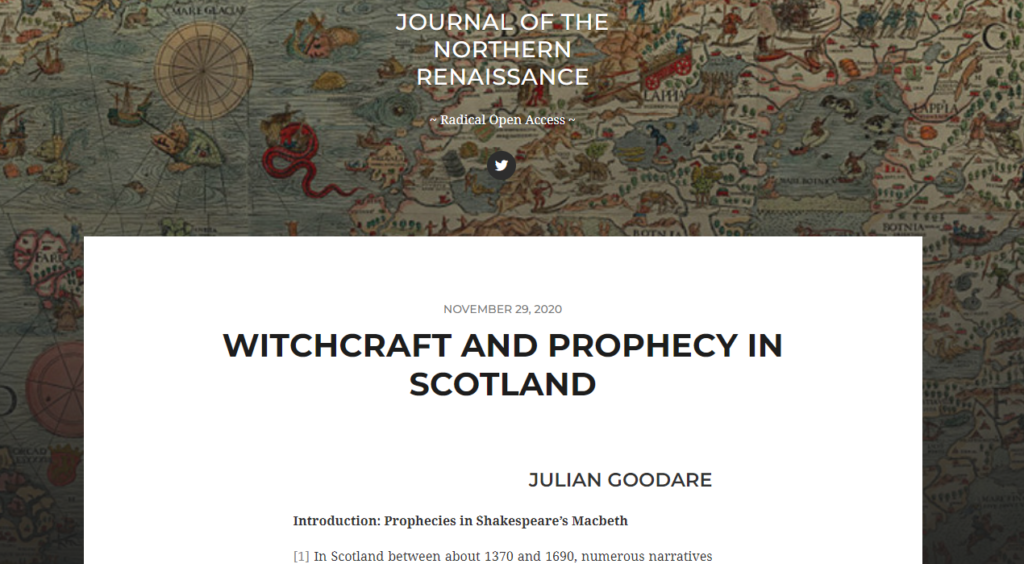
A journal from the Journal of the Northern Renaissance titled, "Witchcraft and Prophecy in Scotland."

Journal of the Northern Renaissance ↗

A journal dedicated to the study of early modern Northern European cultural practices.
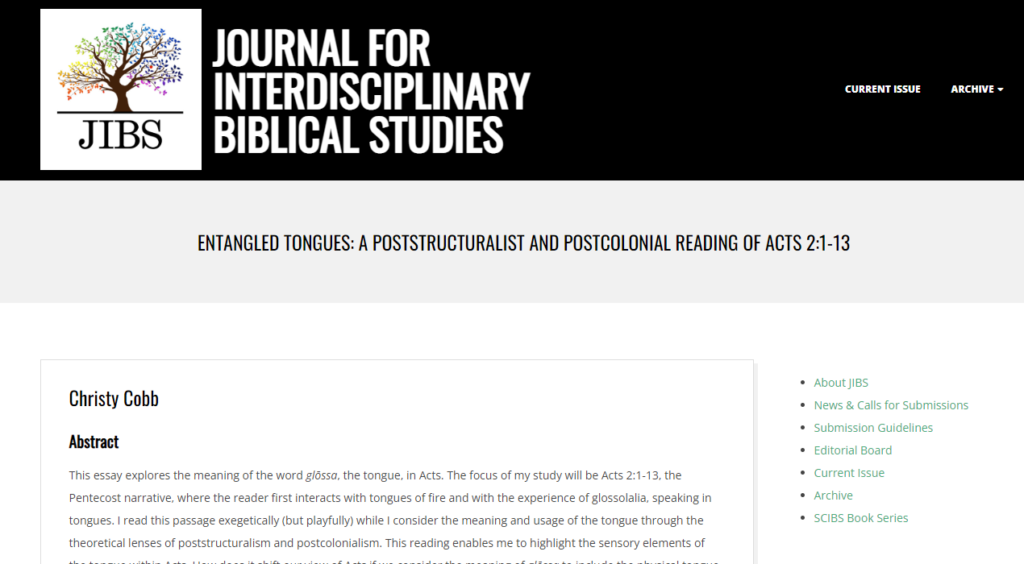
A journal from the Journal for Interdisciplinary Biblical Studies titled "Entangled Tongues: A Poststructuralist and Postcolonial reading of Acts 2:1-13"

Journal for Interdisciplinary Biblical Studies

A journal centered on interdisciplinary, social justice-oriented, feminist, queer, and innovative biblical scholarship.

Support

Support guides for sites, blogs, and WordPress

Support FAQ

Promote Your Project

A banner with a green and white background. On the left side, text reads "Promote Your Project" in bolded letters, with "Commons Showcase" printed underneath. On the right, there is a megaphone.

The TL;DR

  • Sites on the Commons allow for quick setup – users or groups can easily create a blog or site that doesn’t require coding experience
  • Full site editing allows for easy customization, making it possible to create a clean, aesthetically pleasing design
  • The Commons’ high findability in Google’s indexing can make projects more locatable within search results

Share what you’re working on.

Imagine you’re:

  • Leading a research lab of 5 art historians who are creating a podcast on local art within your community. You host your podcast episodes on all the major streaming platforms, but you’d like to create a website where you can link to both your weekly episodes and supplementary content, such as pictures of the artwork mentioned and links to related articles. 
  • Working on your first novel, which you started writing as part of your creative writing MFA program. You’d like to create a blog where you reflect on the process of turning a short story from your portfolio into a longer work.
  • Hosting a mini-conference amongst a group of music theory colleagues. You’d like to develop a website where you can post the Call For Papers and details on how to access the conference.

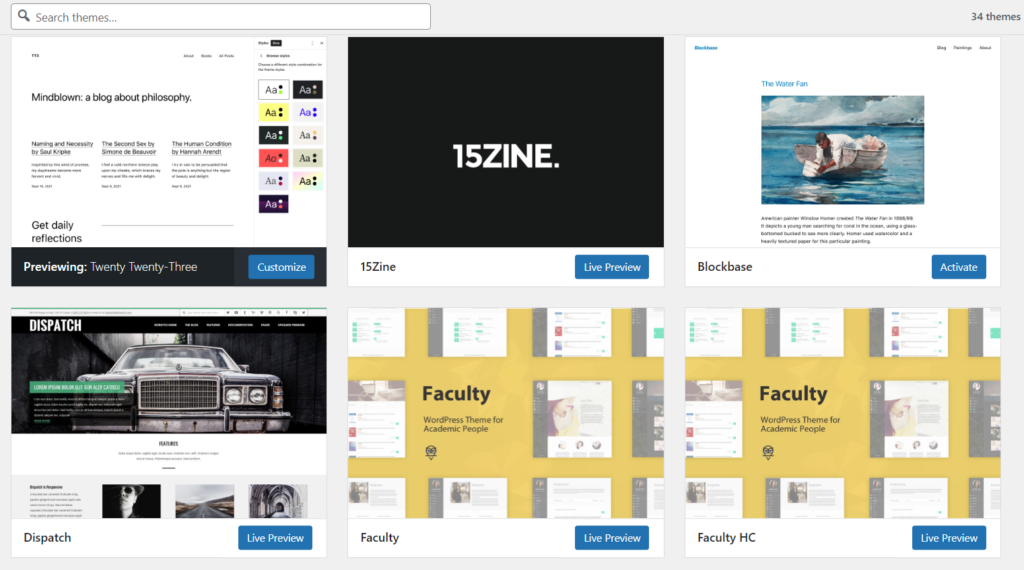
For all of these projects, Humanities Commons sites are an ideal place to get started. With a variety of themes available, it’s easy to find one that fits with the visual style of the project. Once you choose a theme, you can quickly add content, images, and links to customize the look and feel of the site. The creation of your site can take as much or as little time as you’d like, and part of what makes sites useful is you don’t need to do any custom coding. Using the block editor in WordPress is particularly helpful for creating a nice-looking site quickly.

Screenshot of the WordPress "Themes" browsing page with six different website theme examples.
Selection of current customizable themes available on the Commons

In addition to developing a website, the leaders of these projects may also want to consider how they could leverage other areas of the Commons to enhance awareness of their projects. The CORE repository’s high ranking in search engines (including automatic indexing with Google Scholar) makes it easier for a project to be discovered by a broad audience. So, in order to get even more interest around their podcast and receive a DOI for their work, the team of art historians might deposit a few episodes into CORE. The only caveat is CORE has a size limit of 100 MB, so the team may only be able to upload a few of the shorter episodes.

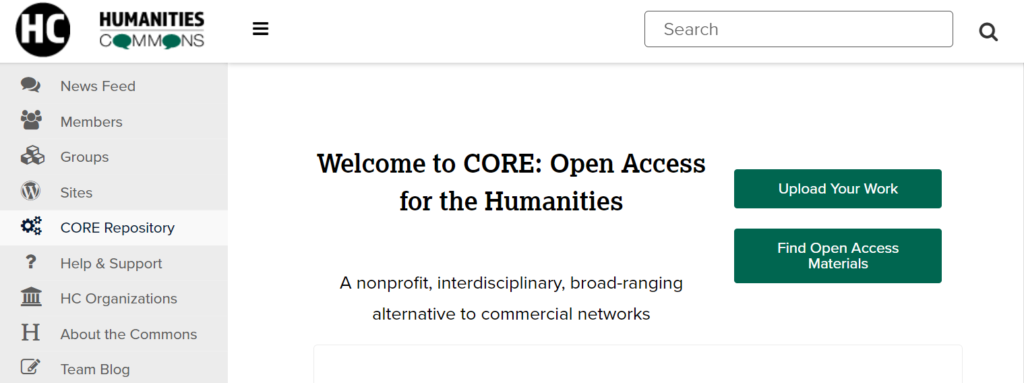
Screenshot of the page for the CORE Repository on the Humanities Commons Website
The CORE Repository on the Commons

Once you’ve added content to the Commons, you’re ready to share it with the world. The next step in spreading the word is to start with the tools available on the Commons. Posting on the news feed or discussion board in a Commons group is one way to find an audience who is already interested in your topic. For example, the music theory mini-conference site could be shared in any of the music history or theory groups on the Commons. Additionally, leveraging other social networks like Mastodon, Facebook, and Twitter is vital, as this will drive more traffic to your project beyond Commons users. Even just a few regularly scheduled posts with a link to your site and a short description of your posts or updates can go a long way.

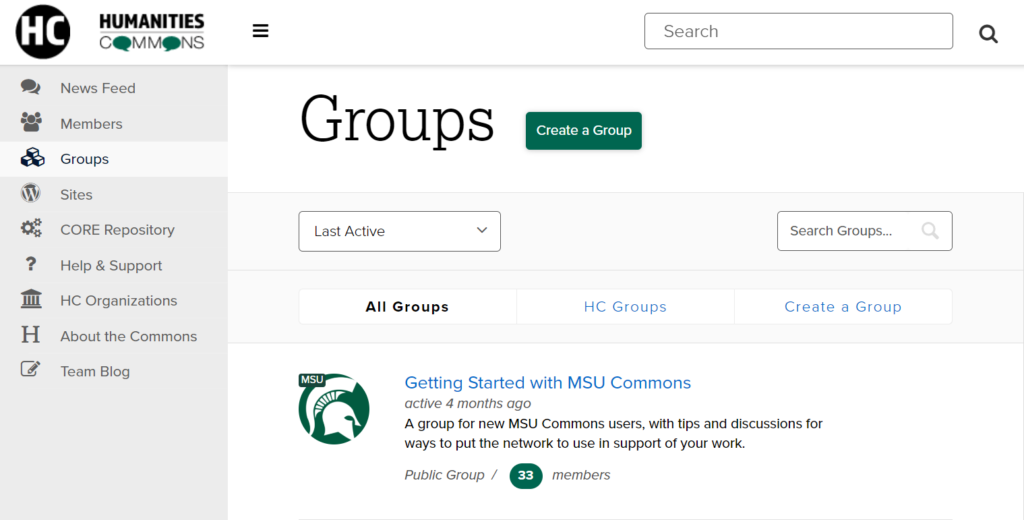
Screenshot of the Groups page on the Humanities Commons. Featured is the "Getting Started with MSU Commons" group.
Groups, like “Getting Started with MSU Commons” on the Commons

FAQs

QuestionAnswer
Is my project right for a Commons site?Overall, Humanities Commons offers enough tools and features so that any project of an academic nature has a place on the Commons. However, for the security of our network, we do have to limit some customization options in WordPress. If you’re looking to create a large-scale project with extensive customization of your site, you may want to consider other options. Contact us at hello@hcommons-staging.org to discuss this further!
Why can’t I add certain WordPress themes or plugins to my site?For security purposes, we limit some of the theme and plugin options available to our users. If you’d like to request a plugin or an added theme, email us at hello@hcommons-staging.org.
Can I create a custom URL for my site?All sites in the Commons network contain the .hcommons-staging.org domain name. We do not offer custom URLs at this time.
I’ve never used WordPress before and am not sure where to start. Any suggestions?There are many tutorials around the web for users who are new to WordPress. Although full-site editing is relatively new, this help guide on full-site editing is a great place to get started. WordPress’s official tutorials are thorough, and there is plenty of additional support online as well.

Examples

Screenshot of the Homepage of L-Pop

L-Pop ↗

A collection of songs and lessons for students learning English.

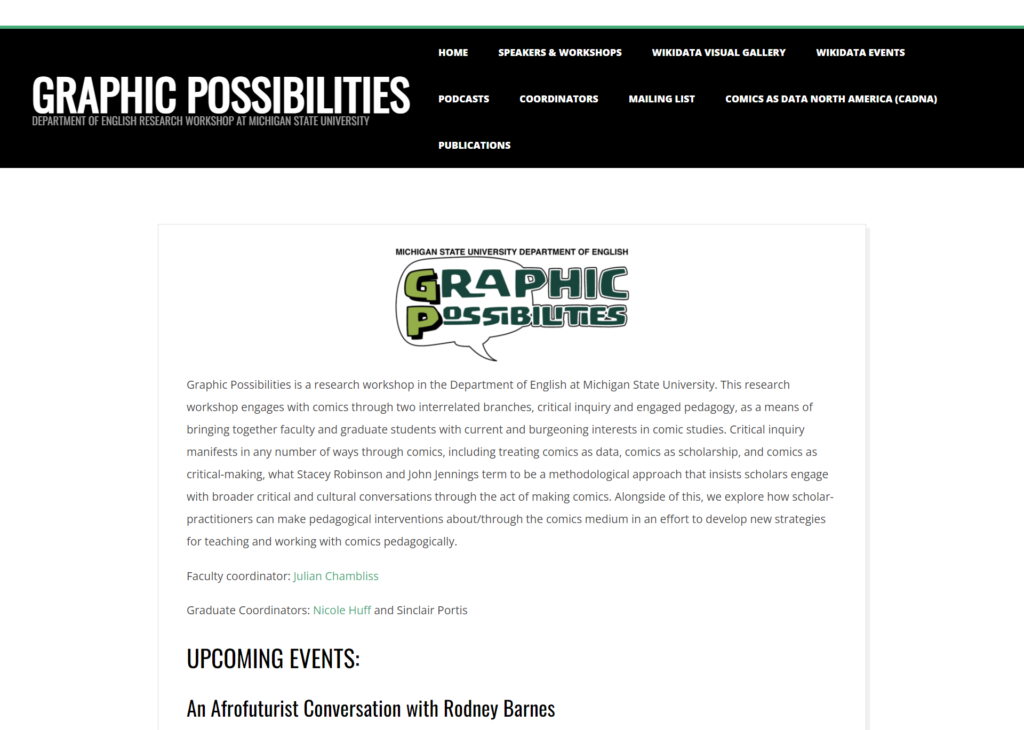
Screenshot of the Homepage of Graphic Possibilities

Graphic Possibilities ↗

A research workshop that engages with comic studies.

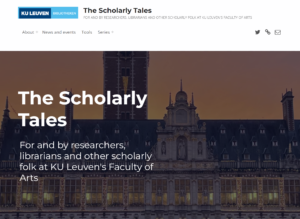
Screenshot of the Homepage of Scholarly Tales

Scholarly Tales ↗

A repository of work by researchers, librarians, and other scholars.

Support

Commons Help & Support

Commons Help & Support: Sites, Blogs, and WordPress

The Web We Want

As we seek new members to join our network, we want to share with you more of the inner workings of Humanities Commons and how we understand our work as part of a collective movement. Today, our community development manager, Zoe Wake Hyde, shares a vision of the future of the web that our team wants. If it resonates with you, we encourage you to consider becoming a Humanities Commons Member.

We live, as they say, in interesting times. The dawn of the internet is within living memory for many, and its different phases of growth and adoption are familiar to most. Whether you’ve gone from Tumblr to TikTok, reminisce fondly about RSS or are all in on AR, the only constant in our experiences of the web has been change.

In the scholarly world, the emergence of online publishing has led to exponential growth in the amount of content available. Traditional publishing systems have reacted by restricting access and trying to maintain scarcity, while the open access movement has gained momentum as a way of leveraging the web’s affordances to break down barriers to access. In turn, the major publishers have pivoted to data as currency, and there is increasing consolidation across the scholarly infrastructure landscape, leading to a concentration of power.

So what drives this change? The reasons are as complex and diverse as human behaviour itself, but two of the major contributing factors are money and power.

Where money is invested and power is leveraged has an enormous impact on our everyday lives on the internet. Unfortunately, much of that impact has been used to position us as consumers and commodities, to be bought and sold to, with our attention becoming the price of participation. That perhaps paints a grim picture, but it’s one we must confront head on.

Like the divine right of kings, so too can the power of the internet overlords be overthrown.

The good news is that money and power can be used to change things for the better. Investment in technologies that catalyze different kinds of interactions in digital spaces, and the right kind of influence on policy and structural mechanisms can make a difference.

So, why does this matter to Humanities Commons?

We see our role in the online ecosystem as creators of an alternative. We resist the idea that human interactions should be commoditized and used as a means to a profitable end. Instead, we seek to facilitate meaningful connections that lead to the creation of new knowledge to be shared openly. We approach designing our tools as an act of service, where our only interest is to benefit users. And we do this work in the domain of knowledge creation and dissemination because we believe in its value to the world.

We also see ourselves as just one piece of a very large puzzle of actors pursuing the same goal, and aim to ally ourselves with others dedicated to creating the same kind of future for online, digital scholarly work. Together, we seek a more just and equitable knowledge ecosystem, where many kinds of knowing are shared and valued. 

That’s the web we want.

But to get there, we have to come back to the question of money and power. To change the dominant logic of the web, we have to invest in the people and products that make it happen.

While we may not have venture capital-level funds available, our combined might as institutions, societies, nonprofits and other invested actors shouldn’t be underestimated.

In our next post, we will explore the role academic institutions have to play in this change.

Become a sustaining member of the Humanities Commons network and support us to build the web we want. Find more information or book a call via calendly.com/zwhmsu.

Purpose, Values, Process, Goals

As we seek new members to join our network, we want to share with you more of the inner workings of Humanities Commons and how we understand our work as part of a collective movement. Today, our founder, Kathleen Fitzpatrick, tells of how we have come together as a team, united by a shared purpose and shared values. If these resonate with you, we encourage you to consider becoming a Humanities Commons Member.

Since early 2020, Humanities Commons has been working toward a sustainable future. Key to that future is the generous support we’ve received from the National Endowment for the Humanities, the Mellon Foundation, and a range of other funders and donors, that has allowed us to build a flourishing team to support the network. But building that team has not been solely a matter of searches and onboarding; we’ve also put a lot of collective labor into ensuring that we’re working together in the most generative ways possible.

We began that work late last August by bringing our all-remote team (minus a few of our more recently hired colleagues) together in Lansing for a two-day retreat. Over the course of those two days, we began the process of getting to know one another, laying the groundwork for the ways we’d work together, and thinking as expansively as possible about our goals and expectations. We all left energized, if a bit daunted by how much work we had mapped out for ourselves and how vast the possibilities seemed. All of us took heart, though, in a sentence that Zoe Wake Hyde (our community development manager) shared with us: “We can’t do everything, but we can do anything!”

Figuring out which things would comprise our *anything* required a lot of collective thinking. During the retreat, we undertook a modified version of the HuMetricsHSS values framework exercise, starting to articulate what most matters to each of us in the work we do. We also began the process of developing a framework for the Commons’ purpose and goals, enabling us to shape our work around the vision of transformation in collective knowledge production that we hope to effect. 

But the retreat was only the start. Over the next several months, the team met for regular working sessions — twice a week, at first — to continue thinking together about who and how we wanted to be. Each of our working sessions was facilitated by a different member of the team, often using a Miro board to ensure that everyone’s thoughts were captured. By late 2022, we had collectively developed a statement of purpose and a statement of values for the network, which we circulated to our governing council and to our user advisory group for feedback.

Today, as part of our sustaining membership campaign, we’re posting these statements publicly, and we invite your thoughts about them. 

Our purpose is to cultivate open spaces for diverse communities to connect, create, share, and experiment. Together we work to transform global knowledge systems.

The values that guide our work are: Experimenting, Cultivating Community, Nurturing Trust, and Supporting Open Exchange of Knowledge

For a more in depth look, read our full statement of purpose and our full values statement, and we invite you to share feedback by commenting on this post or tagging @hello@hcommons.social on Mastodon.

These statements undergird our work as a team, but also our work with the Commons community. In the weeks ahead, as we bring more members into the community of organizations and institutions supporting our work, we’ll share more about how we plan to support that community, how we hope to facilitate self-governance within it, and more.

It’s been a long process leading to this point, but given that our goal is nothing short of transforming our global knowledge system, taking time for reflection, response, and revision is crucial. We very much look forward to hearing from you, and to thinking with you as we move into our next phase of development.

Celebrating Global Accessibility Awareness Day

Improving accessibility in all areas of our work is fundamental to our ambition to create more just and equitable scholarly communications.  In honor of Global Accessibility Awareness Day, we here at Humanities Commons wanted to let you know about some of the work we’re doing behind the scenes to both improve accessibility for site users and to learn and grow as a team. Here are four ways we are putting our commitment into action:

  1. Group Meetings On Topics Related to Accessibility: We’ve integrated accessibility-related topics into our regular working group meetings. This has included watching and reflecting on Axe-Con talks as a team and discussing how to bring inclusive design to all stages of our process.
  1. User Experience Design: From our website to our workshops to our pdfs, you’ll see some design choices and changes coming that aim to increase accessibility throughout the Humanities Commons experience. For example, we will be moving to Atkinson Hyperlegible as our default font. Created by the Braille Institute, this font is designed to increase character recognition and improve readability for visually impaired readers..
  2. User Experience Research: We’ve started whole team conversations about the process of user experience research and integrating a diverse range of voices and perspectives into our testing and conversations. We look forward to working with the community this summer and beyond to learn with and from you about your needs and experiences.
  1. Team Training: Over this coming summer, our team will be taking accessibility fundamentals from Deque University, as well as additional Deque University courses tailored to our daily tasks, and meeting in early Fall to work on integrating what we have learned into our workflows. 

We’re excited to share with you more in each of these areas as we continue to meet and grow as a team. And, of course, we’d love to hear from you if you have ways that you’d like to see our site improve!

Support Humanities Commons as a Sustaining Member

If you know Humanities Commons well, you know that we are committed to a more just and equitable future of knowledge creation. We take our place alongside other incredible people and organisations working towards the same goal, knowing the only way to make true, transformational change is to leverage our collective power.

Right now, we are seeking new members to join our network and help shape the future of the Commons. Our members are critical to our success and keep us connected with the needs and priorities of our community. By becoming a member, you are not only supporting our existing work, but creating new possibilities by contributing your unique perspective.

Hang on, I have an account already – doesn’t that make me a member?

Yes! But also no! Individual users of the Commons are members of our community, but more often, we’ll refer to you as our users. In this context, we are talking about members of our network of participating organisations.

So, why should I become a member?

Humanities Commons’ purpose is to cultivate open spaces for diverse communities to connect, create, share, and experiment, in the service of transforming global knowledge systems together. If this ambition speaks to you, membership is a way to help us work towards that purpose. Member contributions enable us to build the necessary infrastructure for a vibrant knowledge commons, developing exciting new features for individual and organisational users. Member support also helps us to continue to offer our free Humanities Commons site, which benefits everyone invested in open humanities scholarship. In future, we also plan for membership to subsidise the participation of organisations who serve communities most marginalised in conventional knowledge systems.

Just as importantly, membership is, to us, a relationship we seek to foster with our allies and collaborators. These relationships are what will ultimately drive us forward. We seek to be in relation with those who are investing in academy-owned infrastructure designed for a more connected knowledge ecosystem. Who are working towards a future where there are viable alternatives to the closed, proprietary systems that dominate, where we are building the web we want, and where people are treated as more than consumers and commodities. Truly, these relationships are an opportunity for us to lean into our collective power and imagination to build the future we envision.

Ok, but what does it mean to be a member? 

Membership in our network is not simply transactional. Members will be asked to, as much or as little as they can, participate in our evolving governance structures, offer feedback on strategy and direction, advocate for the Commons in the spaces they occupy, and participate in other efforts such as promotional activities and user research. Our goal is to create many avenues for members to contribute in the ways that make the most sense to them, and are always open to new ideas. As our network grows, we expect to develop additional opportunities, including research and funding collaborations.

In addition, all members receive:

  • Recognition as a sustaining member on our website and other communication channels as appropriate (e.g. conference presentations)
  • Quarterly member updates
  • Opportunities to promote and collaborate on projects with other members
  • The right to nominate & vote for governing council members
  • The ability to contribute to our roadmap (i.e. contribute to specific projects that are of importance to your organisation)
  • Top priority to join a cohort of institutions establishing their own Commons instances with our support (launching January 2024)

Interested? Here’s how to sign up.

Membership is open to any organisation, department, research center, institution, or consortium who wishes to engage with our work.

Until June 30, 2023, we are offering a one-time option for members to join at US$5000 per year, with the possibility of signing on at that rate for up to 5 years. However, if you are interested in becoming a member, but have a different budget in mind, please reach out, as we’d love to talk through different options.

The first step is to set up a call with our community development manager, Zoe Wake Hyde, at calendly.com/zwhmsu and she will guide you from there!

Find more information about membership and a short FAQ here.

Statement on Events Affecting MSU Community

On February 13, our team and community were touched by the tragic events at Michigan State University. Three students – Arielle Anderson, Alexandria Verner, and Brian Fraser – lost their lives, five more were critically injured, and countless others were deeply impacted by the violence our community experienced. Our hearts go out to them and those closest to them in this unimaginably difficult time. 

MSU is the home institution of the Humanities Commons team, and many of us have long standing relationships with the university. Even those of us new to the team or working remotely have felt this tragedy keenly.

There are few words to offer in such circumstances. We are grieving. We are angry. It is difficult to go through the motions when the world seems so dark. We’re trying to figure out how to move forward. We’re grappling with the fact that this is now a part of our story.

We share this statement as a marker of what has affected our team and our community, and as an offer of solidarity and love to those for whom this resonates all too much.

Thank you to all those who have reached out in support. We are doing our best, and will find our feet again. In the meantime, we ask for grace, for ourselves and for all those who are hurting. 

Support Independent Scholarly Communication Infrastructure This Giving Tuesday

Want the TL;DR? We’re seeking donations to support our Mastodon server! If you believe this is a worthwhile cause and are in a position to help, we would be hugely grateful for your donation.


Academic communities need infrastructure, just as our local communities do. And infrastructure requires investment, which is why this Giving Tuesday we’re asking for your support for a new piece of infrastructure we have recently launched: hcommons.social, our Mastodon server.

Mastodon is an open source, decentralized social network developed by a non-profit that is gaining steam as an alternative to the increasingly unstable Twitter. For better or worse, Twitter has become an established part of the academic infrastructure, and while its issues have never been invisible, especially to those who are most harmed by them, recent events have pushed many to find a new space for their academic and social networks to live and grow.

We’ve long been in the infrastructure game, and see this new commitment as important to our work to ensure there are viable options for researchers, students and educators looking for an alternative to for-profit, extractive social media platforms.

Our experience also means we know that maintaining infrastructure is like the duck feet paddling hard under the surface of the water.

Recently, our Mastodon duck hasn’t been so subtle in its paddling as we find and fix the many kinks that have come with launching and seeing it grow so quickly. We’re thrilled that there has been such great uptake, and want to be sure we can continue to support this growth.

Clearly, though, with that commitment comes costs. And this Giving Tuesday, we’re asking for your help so we can continue to invest time and resources in growing hcommons.social.

Right now, our major costs are hosting and maintenance. The former we are currently covering with DigitalOcean credit and the latter is currently covered by volunteer labour. As a rule, we dislike not paying people for their time, so this is a big piece where we hope you as a community can support us to engage someone (or several someones) more regularly and adequately compensate them for their work. Right now, hosting is estimated at $150 per month and we’ve estimated support and maintenance at an additional $150 per month.

In addition, we are planning to establish a moderator community who can take on duties like responding to reported behaviour, approving new accounts and monitoring for spam. Once again, our goal is to be able to offer these moderators a small honorarium for their contributions. We’ve estimated this cost at $200 a month to start.

With these in mind, our goal for this Giving Tuesday campaign is to fund 6 months of hosting, maintenance and moderation for a total of $3000. Can we do it? There’s only one way to find out!!

If you’re as invested as we are in a future where communities build the product, instead of being the product, and in a position to contribute, we would be hugely grateful for your donation. And if you want to know anything more before making a commitment, please reach out to @hello@hcommons.social on Mastodon, or hello@hcommon.org (good old fashioned email).

Thank you for all your support,

The HCommons Team

Humanities Commons Launches Mastodon Server Open to Scholars

Anyone using or observing Twitter will be well aware of the recent purchase of the company, which throws the future of the platform into, at best, uncertainty, and at worst, turmoil.

In response, many scholars have been considering a move to Mastodon, a non-profit, federated alternative social network. Being federated, Mastodon requires access to a server (here’s more on how Mastodon works), which is where we come in.

In response to community requests and our own recognition of the potential in this moment, we are launching hcommons.social, a Mastodon server open to all scholars (which we take to include: researchers, librarians, instructors, students, staff and anyone else with an active interest in research and education.) While we expect this space to lean Humanities-heavy, we leave it up to users whether it feels like the place they want to be. To start, there will be no limit on sign-ups, though we will review that policy over time as we learn more about the costs and overhead of managing the server.

We’ve moved quickly to get this up and running, and are doing so in the spirit of experimentation. We’ve never done this before. Many of the people who use it will probably not have either. So we’re going to have to figure things out together!

To start, we are putting in place:

  1. Server rules that prioritize harm reduction and will be enforced via…
  2. A clear moderation policy,

And if you’re new to Mastodon, a wonderful HC user has created an excellent guide to getting started.

As the server grows (or doesn’t), we will be reassessing what is needed and will want to hear what you need to get the most from the space. There are lots of outstanding questions around costs, level of interest, support needs and our capacity, but we’re of the opinion that we can best answer those by diving in with you all! We’re also lucky to be launching in a moment where more how-tos are being created than ever before, so we encourage you to draw on those as our expertise and support capacity are still developing.

In that spirit, and to help make this undertaking a little more sustainable for our team, we’re inviting anyone who might be interested in becoming a moderator to register their interest. It is early days figuring out what this looks like and what the needs are, but if you throw your hat in the ring we will reach out when we know more.

More than anything, we are excited to see what you all will do with this opportunity.

As a team, we are deeply invested in creating spaces where community interactions are the focus, not just a front for selling advertising, mining data and extracting value. Whatever anyone’s predictions, the acquisition of Twitter by a billionaire technocrat is just another chapter in a long history of platform commercialization and enclosure, which is inextricable from the trend of increasing harm to minoritised users and communities, predominantly Black, Brown, Disabled, Queer, and Trans people.

This history is not so different from the legacy of publisher gatekeeping, platform monopolisation and data extraction that we at Humanities Commons are combating through the provision of open, values-driven, academy-owned infrastructure for digital scholarly work. 

In other words, we are always on the lookout for opportunities to create spaces of radical possibility. We hope you all have fun exploring this one.